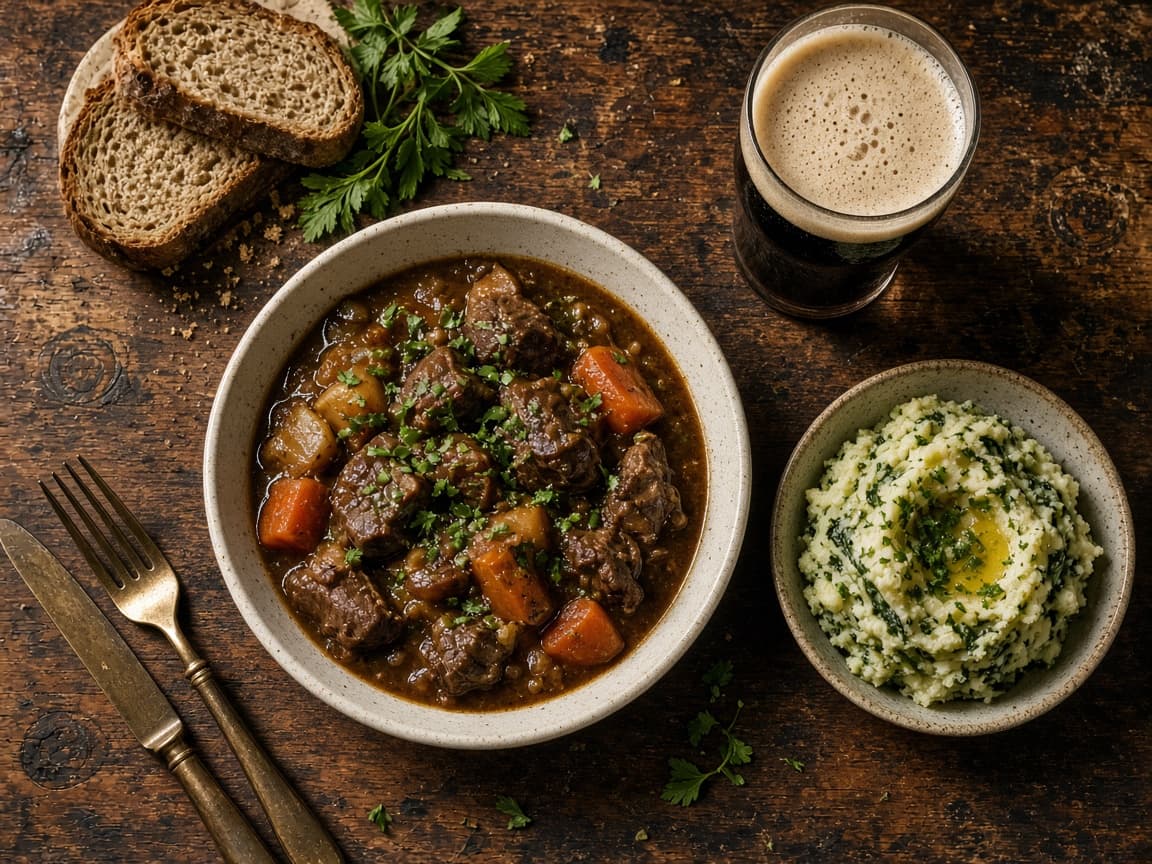
Traditional Irish pub food is a short list of plain plates: stew, soda bread, colcannon, bacon and cabbage, and a cooked breakfast. They come from farmhouse cooking and they sit well beside a pint. In Australian rooms they often share a menu with steaks, sandwiches and other local pub food. That mix is ordinary. A proper stout, when it is poured with care, is filled in two stages so the surge can settle into a cream head before the glass is topped.
Those two sentences are the answers most people came for. The rest of this guide is how the plates are usually built, how the drinks are treated, and how to order without turning the bar into a lecture.
The plates
Irish stew is the centre. It is a slow pot of lamb or mutton with potato, onion and parsley; some houses add carrot, some refuse it, and both habits have defenders. What matters in a pub is that the broth tastes of the meat and that the potato has had time to thicken it. A stew that is only gravy and cubes is a different dish wearing the name.
Soda bread is the other essential. It is a quick bread raised with bicarbonate of soda rather than yeast, often with buttermilk. It should have a crust and a close crumb. It is there to take butter and to go into the stew. If a house bakes it, you will smell it. If a house buys it in, it can still be decent. Ask for it with the pot, not as an afterthought.
Colcannon is mashed potato with cabbage or kale and butter. Champ, a close cousin, uses spring onion. Either one is a winter plate that Australian kitchens can do well because the ingredients are ordinary here. Bacon and cabbage is boiled bacon with cabbage and potato, sometimes with a white sauce. It is not a ham steak with a garnish. If the kitchen does not know the difference, order the stew.
A cooked Irish breakfast — sometimes called a fry — brings bacon, egg, sausage, black and white pudding, tomato and toast or soda bread. Australian houses substitute local sausages and may add mushrooms. The plate is a morning or a recovery plate, not a dare.
Boxty, potato farls and a fish supper appear where a kitchen has the patience. Shepherd’s pie and cottage pie sit on many Australian boards already; the Irish room will not be offended if that is what you want. What this guide will not do is invent a secret house special or a price. Menus change. The method does not.
How an Australian kitchen keeps the idea
The honest Australian version is not a replica of a particular county. It is a pub kitchen that understands slow pots, soda bread and a fry, and that does not drown them in sugar or dye. On 17 March the temptation is to tint everything green. Resist that as a diner. Ask for the stew as it is cooked the rest of the year.
Allergies and refusal are ordinary. Say gluten if soda bread is a problem; a house can often offer potato instead. Say if you do not eat meat; vegetable pots exist, though they are not the historical stew. Do not expect a kitchen in a rush to invent a new plate from a speech. The functions guide covers how to ask for a set menu when you are feeding a room rather than yourself.
Tea belongs with this food. So does water. A pot of tea after a fry is not a joke. It is how the plate was meant to end.
Drink beside the plate
Stout is the drink people picture: dark, bitter-sweet, with a cream head. Irish red ale is maltier and easier for people who do not want roast barley. Cider appears, dry or sweet. Irish whiskey is a separate order — often with a drop of water, not as a race. Local beer sits on the same taps in almost every Australian house. Ordering it does not make you a poorer guest.
Keep the order simple. If you want the stout, say so and wait. If you want a whiskey, name a style if you know one (pot still, single malt, blend) and accept a suggestion if you do not. If you want nothing alcoholic, ask for tea, coffee, soda and lime, or water. You do not owe the room a pint.
Cocktails appear in some rooms. They are not the centre of this tradition. If you want one, order it as you would anywhere else and do not ask the bar to invent an Irish name for it.
How to pour a stout
A careful stout pour is a two-stage pour. Use a clean, dry glass. Hold it at an angle under the tap. Open the tap fully and fill to about three-quarters. Rest the glass on the bar until the surge of bubbles has risen and settled into a distinct cream collar. Return the glass under the tap, now more upright, and fill to the rim so the head sits just proud. Serve it as it is. Do not swirl the glass to hurry the settle. Do not scrape the head off.
That is the method as it is taught in bars that still care. Brand houses publish their own demonstrations; this guide will not invent official timings or a secret angle. What you can see, as a drinker, is whether the person pouring had time. A stout that arrives in ten hurried seconds with a huge foamy cap and a grey body was not poured. It was filled.
If you are pouring at home, the same stages apply from a can or bottle that is built to rise, though the surge will be smaller. Use a glass you would be happy to photograph in ordinary light. Rinse it of detergent. Cold glass, clean tap, patience.
Drink it in its own time. A stout that has sat until the head is gone is still drinkable; it is just a different glass. Do not send it back for that reason unless it is sour or flat from the start.
Whiskey, tea and the end of the night
Irish whiskey is often lighter on peat than some Scottish styles, though that is a tendency, not a law. A drop of water can open a glass. Ice is a preference, not a sin, in a public bar. Do not perform a tasting note you do not have. “This is good” is a complete sentence.
A hot whiskey — whiskey, water, lemon, cloves, a bit of sugar — is a winter drink and a useful one if someone is coming in from rain. It is still alcohol. It is not medicine.
Tea at the end of a meal is the civilised full stop. So is a glass of water before you stand up. The National Health and Medical Research Council writes the Australian guidelines to reduce health risks from drinking alcohol. DrinkWise Australia translates moderation into daily language. This site will not invent a number of “safe pints”. It will say: eat, go slowly, stop, and do not drive.
Ordering without theatre
You do not need Irish phrases to order. You need a clear plate, a clear glass and a thank you. If the board is long, pick one thing the kitchen is set up to do. If you are sharing, stew and bread scale; a fry does not.
If you are with people who do not drink, order food first so the table has a centre that is not the tap. If you are with children in a dining room, ask what the kitchen can do that is not a dyed novelty. If you are marking St Patrick's Day, the same plates apply. The date does not improve a bad stew and it does not excuse an empty stomach.
A note on names and brands
People will ask for a stout by a brand they know. That is ordinary. This guide describes a pour and a plate, not a shopping list. A house may keep one stout or three. A house may keep none and still cook a stew. Order what is actually on the tap. If the person pouring is proud of a local dark beer, try it. The tradition is the care, not the label.
The same is true of whiskey. A short pour, a drop of water, and a bit of quiet will tell you more than a speech about counties. If you do not like it, say so politely and drink tea. No one who keeps a decent room will mind.
What this guide will not do
It will not name a chef, a brand ranking or a secret recipe from a particular house. It will not tell you what a function menu costs. It will not pretend that every pub kitchen in Australia is cooking from a grandmother’s book. Some are. Some are heating a pot that is good enough. Your palate can tell the difference faster than a paragraph can.
If you want the room around the plate, the Irish pubs guide is the cultural half. If you want music after the meal, use the sessions guide. Leave the table as you would at home: crumbs in, glass up, no speech required.