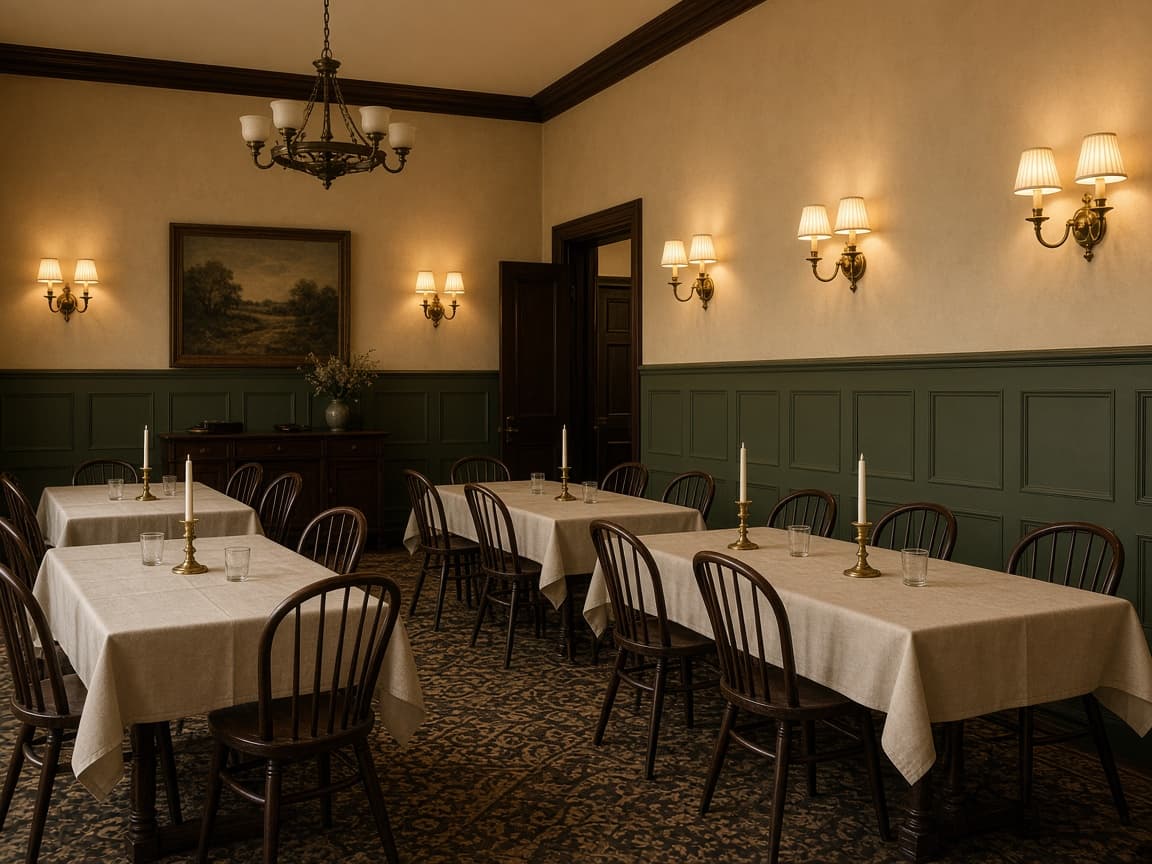
To plan a function or a wake in a pub, write down the purpose, the date, the start and finish, the number of people and any access needs, then ask the house about the room, the food, the music and how drinks will be served. For a wake, ask for a quiet space, flexible arrival and a way for people to leave without walking through a party. That is the whole method. The rest of this guide is why those questions matter and how to keep the gathering decent.
This is not a booking desk. It will not hold a room, name a venue or invent a package. It will help you arrive at a conversation with a house as a prepared person rather than as a hopeful crowd at the door.
Name the gathering
A birthday, a rehearsal dinner, a club lunch, a book launch and a wake are not the same night. Say the word. Staff can place you in a public bar, a dining room, a back room or a garden only if they know what they are placing. A wake needs more quiet and more give in the times. A twenty-first may need a door that can be watched. A work drinks may need a finish that respects the next morning.
If you are not sure what the gathering is, you are not ready to enquire. A “bit of a thing on Saturday” is how rooms get double-booked and how families get seated next to a choir.
Write a short brief for yourself: who it is for, why people are coming, how many are likely, how many are certain, whether children will be there, whether anyone needs a step-free path or a quiet corner, and when you want people gone. Take that brief to the conversation.
The questions that prevent a bad night
Ask whether the room is private, semi-private or simply a reserved table in a public bar. Ask what time you may arrive to set a photograph or a book of condolence. Ask what time food will come, and whether it is a set plate, a shared table or a menu people order themselves. Ask whether a cake is allowed, and whether a kitchen will plate it.
Ask how the bar will work. A tab needs a limit and a name. Cash-as-you-go needs enough staff. A combination needs a sentence everyone understands: “Drinks on the family until seven; after that people buy their own.” Do not invent a price in that sentence. Ask the house what they can do, and write down what they said.
Ask about music. A playlist from a phone is not the same as a session, and a booked duo is not the same as a speaker in the ceiling. If you want quiet talk, say so. If you want a tune, ask whether the room can take it without forcing it on a neighbouring table.
Ask about access: a ramp, a toilet, a place to park a pram or a walking frame, a seat away from a speaker. Ask about last orders and lock-out if the night will run late. Ask whether you may put a small notice on a table, and whether you may not.
Ask what happens if numbers fall. Funerals and winter birthdays both lose people. A house that can move you to a smaller table is a better partner than a house that can only recite a minimum.
Wakes and the hours after a funeral
Irish-Australian families have long used a public house or a hall after a burial or a memorial. The point is tea, sandwiches, a drink for those who want one, and a place where stories can be told without a lectern. The point is not a lock-in.
Tell the house it is a wake. Ask for a room where people can come and go. Some will stay twenty minutes. Some will stay until close. Do not design a programme that punishes either. Put food out early. Put water and tea where they can be reached without asking a busy bar. If there is a photograph or a notice, keep it to one table so the rest of the room can still be a pub for people who are not with you.
Music, if you want it, should be asked for, not assumed. A single song can be enough. A session can be right if the dead person was in one, and wrong if the family is exhausted. Check with the family, not only with the players.
Responsible service still applies. Grief is not a licence. Staff may refuse a person who has had enough. Back them. Appoint one or two people in the family to watch the edges: the uncle who drives, the cousin who does not eat when they drink, the friend who has nowhere to go next. A decent wake ends with people getting home.
Birthdays, work and the rest
A birthday in a pub is easier than a wake and easier to overdo. Pick a finish time and put it on the invitation. If there are speeches, keep them short and keep them away from the walkway. If there are children, use a dining room at a dining hour.
Work drinks need an even clearer tab limit and a sentence about not needing to stay. People with early shifts, no interest in alcohol, or a long commute should be able to leave after the food. If the gathering is meant to thank people, the thanks can happen before the second round.
Club lunches and fundraisers should be described as such. A raffle, a guest and a microphone change the room. Ask whether the house wants those things and whether the neighbours will hear them.
St Patrick's Day gatherings need more lead time. Say the date. Ask whether the house is already full with the public. A private room on 17 March is a different ask from a private room on an ordinary Monday.
Food for a room
The plates in the food and drink guide scale unevenly. Stew, bread and a shared table work. A fry for forty does not, unless the kitchen has said it does. Ask for a set plate if you need everyone fed at once. Ask for bowls and sandwiches if people will arrive over two hours.
Name allergies early. Name how many people will not drink, so the kitchen does not plan only for pints. Do not print a fake menu in an invitation. Print the hours and the fact of food, then confirm the plate when the house confirms it.
If you are bringing a cake or a dish yourself, ask. Kitchens have rules that are about safety, not about pride.
Drink, duty and the end of the night
The house has a legal duty to serve alcohol responsibly. You have a social duty not to fight them. Put food first. Put water on the tables. Do not run a game that only works if people drink faster. The National Health and Medical Research Council publishes the Australian guidelines on alcohol. DrinkWise Australia is the plain-language companion. The legal age is 18. If your gathering includes people under that age, they need a dining context and a plan that is not the bar.
Do not drive. Write that on the invitation if you have to. Put a tram time or a taxi note in the same place you put the address.
Finish when you said you would. Thank the staff. Take the notices down. Take the lost jumper. A gathering that leaves a room worse than it found it will not be remembered for the speeches.
Invitations without theatre
Write the invitation as you would write a note on a kitchen table. Name the person or the reason, the place, the hours, and whether food will be there. Say if children are welcome. Say if the gathering is a wake, so people do not arrive dressed for a birthday. Do not promise a band you have not confirmed. Do not promise an open bar you have not limited.
If people will come from a church or a cemetery, put the pub address and a simple line about parking or a tram. If people will come from work, put the finish time twice. A clear invitation prevents half of the awkwardness that people blame on the room.
What you should not ask this site to do
Do not ask for a recommended venue. A recommendation is a ranking in disguise, and this desk will not invent one. Do not ask for a typical price. Prices belong to the house on the day you ask. Do not ask for a DJ, a staff name or a special that used to exist. Those details are not culture; they are someone else’s business, and they are not published here.
Use the contact form if a part of this guide is wrong or missing. Use the house itself if you need a room. The Irish pubs guide will help you read the public room on an ordinary night, which is still the best rehearsal for a night when the room is yours for a few hours.